
We often share the “good” stories on the DML blog—how people, churches, and denominations are learning to practice work as worship and transform their communities.
But sometimes we must tell the hard stories, too.
For the past several weeks, DML has carried a heavy burden over the ongoing kidnapping crisis in Nigeria. Approximately 21 people are kidnapped every day, with some regions suffering far more. Police checkpoints line the roads, and community members organize night patrols to protect their families.
I want to share the story of what has happened to one of our Nigerian leaders, shared with his permission. Names are changed and faces blurred for their protection.

A few years ago, DML Nigeria leader Dr. Aliyu learned that his name was on a kidnapping list. With several doctorates, he was considered a valuable target for ransom. He moved with his wife Esther, and their two children, from Kaduna to Jos, leaving behind their farm, his office, Esther’s pharmacy and clinic, and their children’s school and friends.
After a couple of years, they returned home and enjoyed a year of peace. Then the threat returned. Six months ago, they left their home and farm again, this time moving to another community within Kaduna.
Their house sat empty until Adeyemi, one of their adopted sons, needed a place to stay between mission assignments. A common practice in Africa, adoption often means welcoming a child or young person whose parents cannot adequately provide for them. Adeyemi moved in with his wife, Blessing, and their four-year-old daughter, Favor.
Two months ago, bandits came to a neighbor’s house looking for Dr. Aliyu. They didn’t find him, but they kidnapped a young woman named Mary.
Then, four weeks ago, they came to Dr. Aliyu’s home at 8 p.m.—an hour before the community watch began. They found Adeyemi, Blessing, and Favor. When Adeyemi resisted being kidnapped, the bandits brutally murdered him with machetes in front of his wife and daughter.
They kidnapped Blessing. Somehow, four-year-old Favor escaped. She was found the next day in a neighbor’s compound, her shirt covered in blood. She had witnessed her father’s murder.
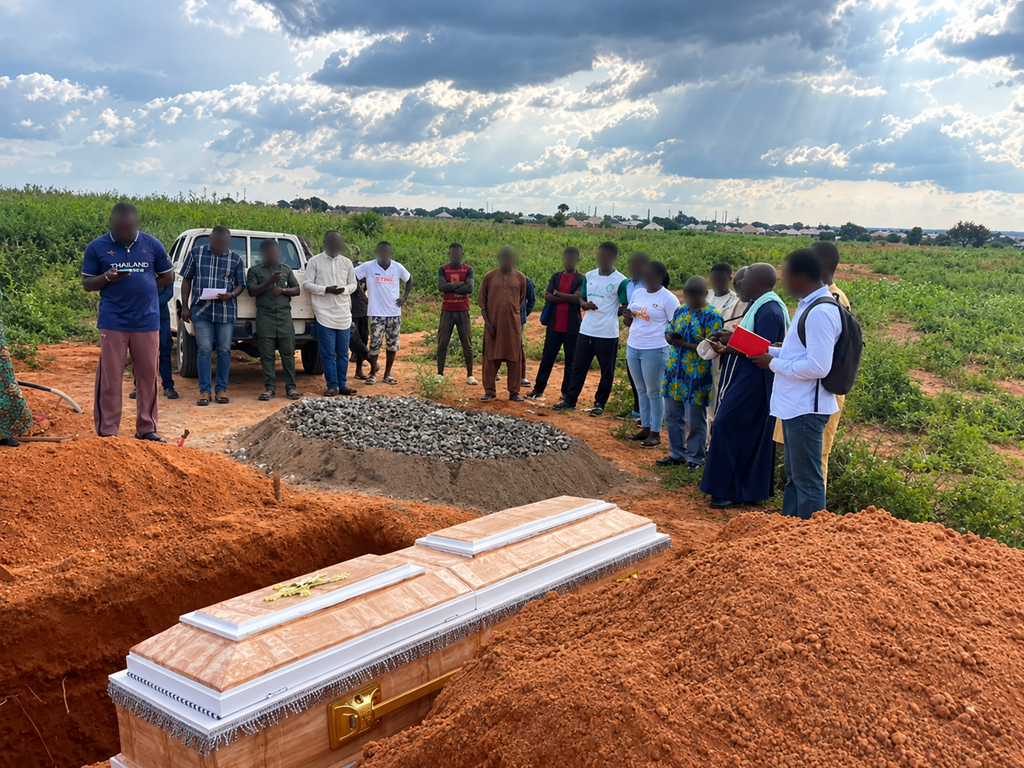
Today, Favor lives with Dr. Aliyu and his family. They still fear for their lives, sleeping elsewhere each night and returning to their home only during daylight. We are grateful Dr. Aliyu is alive, but we grieve with them for Adeyemi. We pray for little Favor, whose young heart and eyes have endured horrors no child should experience. And we plead with God for Blessing’s safety and release. She missed her husband’s burial and likely has no idea what has happened to her daughter.
Meanwhile, kidnapping has become a business. Professional negotiators now handle ransom payments, and Dr. Aliyu’s first priority was to hire one to bring Blessing home.
DML decided long ago that we would not pay ransom or contribute to this corruption. That decision is easy to make when the person at risk is not your loved one. It becomes far more complicated when it is.
In these parts of Nigeria, kidnapping has become part of the system. The government has been unable—or perhaps unwilling—to stop it. What happens when kidnapping is no longer the exception but the rule? What is the right decision when refusing to pay may mean someone is killed?
As Dr. Aliyu and I discussed the situation, he explained that he would do whatever he could to free Blessing and reunite her with Favor. “Favor needs one parent alive,” he said. He planned to sell his car to pay the ransom—the same car we affectionately call his “office,” because he often joins our Zoom meetings from the roadside.

The ransom was negotiated for both Mary and Blessing is approximately $5,000, plus one motorcycle, presumably to help the bandits continue their operations. Kidnappers collect millions of dollars each year through this trade.
Does this make us think about the need for job creation in a country of high unemployment as well as the need for a theology of work? Absolutely. We have prayed for years about the need for meaningful work and flourishing communities in Nigeria. But today, I want to focus on something else.
I ask you to pray for this madness to stop.
This is only one family’s story. Imagine the trauma carried by every family in these communities, and by those who sacrifice their sleep to patrol the streets at night, trying to protect their neighbors.

I must confess something. When Dr. Aliyu sent me a picture of the motorcycle purchased for the kidnappers, my first thought was, I hope they crash and die on it.
Then I remembered our prayer call the day before, when I had heard Dr. Aliyu pray:
“God, I pray that every time these bandits get on this bike, that they may experience a connection with you that will cause them to turn their hearts and minds to what is good…that they learn about your love and your mercy…”
His prayer was far more gracious than mine.
Here is a man who has lost his adopted son, whose family remains under threat, and who is desperately trying to bring a kidnapped woman home to her little girl. Yet he prays for the very people responsible—to encounter God’s love and mercy.
He is showing us what it means to love our enemies and bless those who persecute us.
May God help us.
Please pray with us—not only for Dr. Aliyu and his family, Blessing, Favor, and Mary but for all the families suffering across Nigeria. Pray for protection, for Blessing and Mary’s release, for healing for those traumatized by violence, and for the hearts of the bandits to be transformed.
May this madness end.